Building Stronger Tendons: Why Plyometric Training and Collagen Work Together

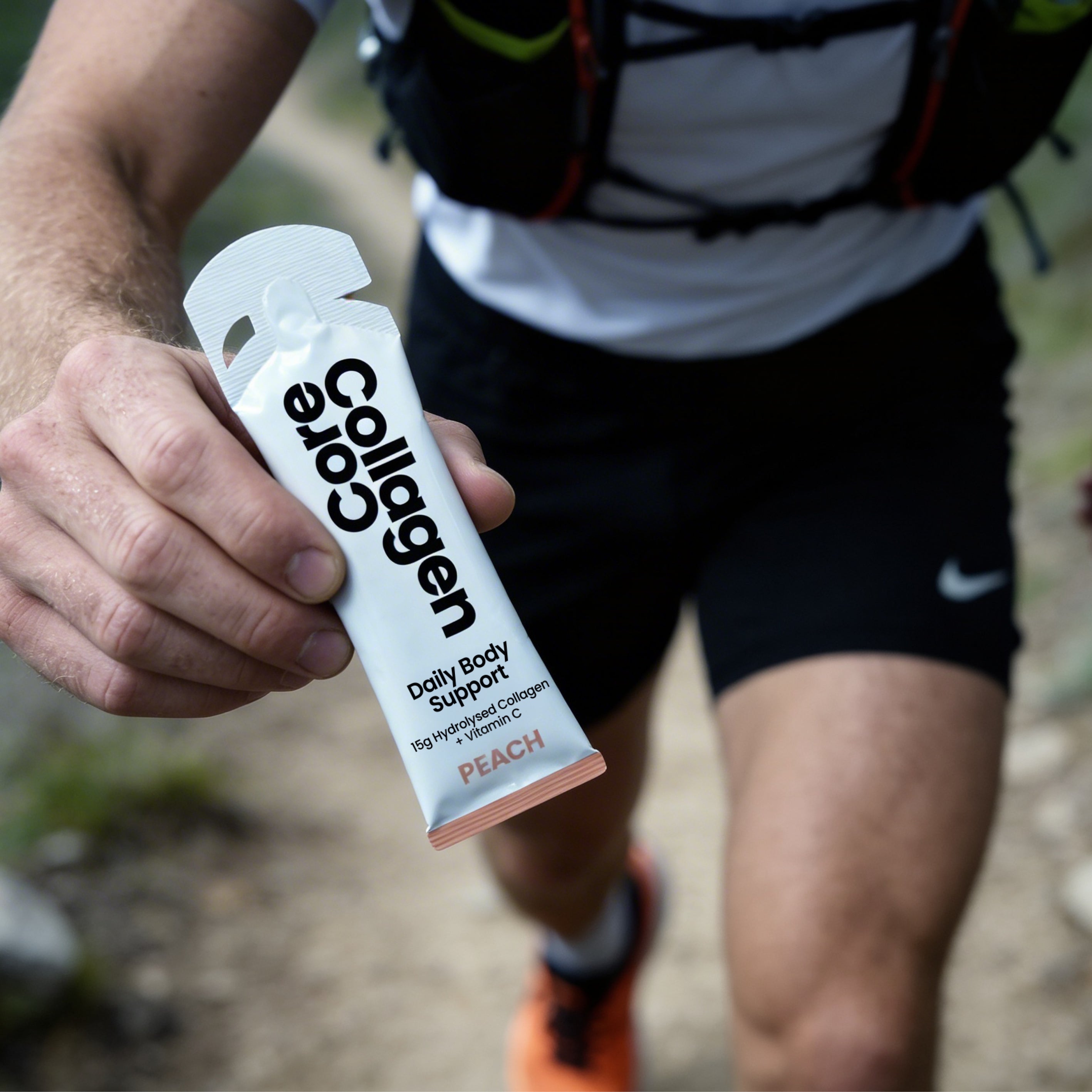
When we think about getting stronger, most of the focus goes to muscles. But for runners, triathletes, footballers, and anyone training consistently, tendon strength is just as important. (*1)
Tendons are the connective tissues that link muscle to bone, helping transfer force efficiently through the body. Whether you’re sprinting, jumping, or pushing through heavy training blocks, stronger tendons help support resilience and efficient force production. (*1)
Plyometric and strength training can improve tendon stiffness and mechanical properties over time, helping the body better tolerate repeated load. (*1)
Why Tendon Strength Matters
A stronger, stiffer tendon has a greater ability to store and release force1.
This matters because tendons act like springs. During movements such as running, jumping, or explosive changes of direction, they absorb energy and release it rapidly.
In simple terms, the tendon becomes better able to tolerate training stress. (*1)
This becomes especially important during:
- high-volume endurance blocks
- plyometric strength sessions
- race preparation
- repeated impact sports
How Plyometric Training Builds Tendon Strength
Plyometric exercises involve fast stretch-shortening movements, such as:
- box jumps
- squat jumps
- pogo hops
- split jumps
- bounds
These movements place rapid, repeated load through the tendon.
Over time, this mechanical stimulus encourages the tendon to adapt, increasing stiffness and improving the way force is transferred through the lower limb. (*1)
The Role of Collagen
Tendons are made primarily of type I collagen(*2), which provides their tensile strength.
When tendons are exposed to training stress, the body increases collagen turnover as part of its natural remodelling process. (*2)
Studies have shown that 15g per day of collagen, especially when taken around exercise, aligns with intake levels explored in connective tissue research. (*2)
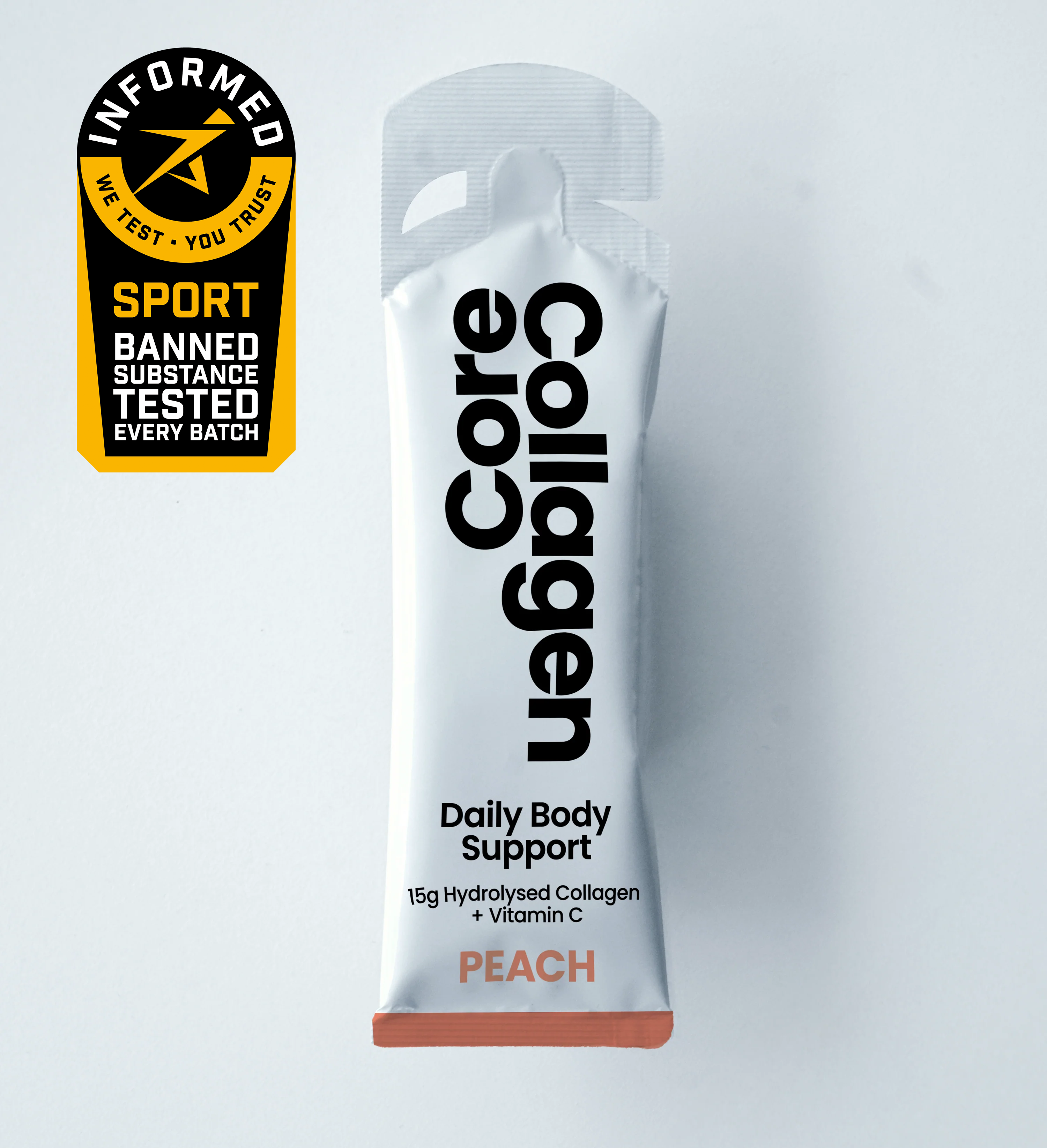
This is why CORE delivers 15g of hydrolysed collagen per serving — designed to fit easily into a consistent daily routine.
Why Vitamin C Matters
Vitamin C plays an essential role in normal collagen formation. (*3)
When paired with collagen intake and mechanical loading, it supports the body’s natural collagen-building processes3.
Final Thought
Stronger muscles matter. But stronger tendons often underpin long-term consistency in training.
- Plyometric strength training provides the stimulus.
- Collagen provides the structural protein.
- Vitamin C supports collagen formation.
Together, this creates a science-led approach to supporting connective tissue during demanding training blocks.
References
1. Effects of plyometric training on muscle–tendon mechanical properties and behavior of fascicles during jumping
https://pmc.ncbi.nlm.nih.gov/articles/PMC8554776/
2. Vitamin C–enriched gelatin supplementation before intermittent activity augments collagen synthesis
https://pmc.ncbi.nlm.nih.gov/articles/PMC5183725/
3. The effects of collagen peptide supplementation on body composition, collagen synthesis, and recovery from joint injury and exercise
https://pmc.ncbi.nlm.nih.gov/articles/PMC8521576/